 My
MyCheddar Man: What His DNA Reveals
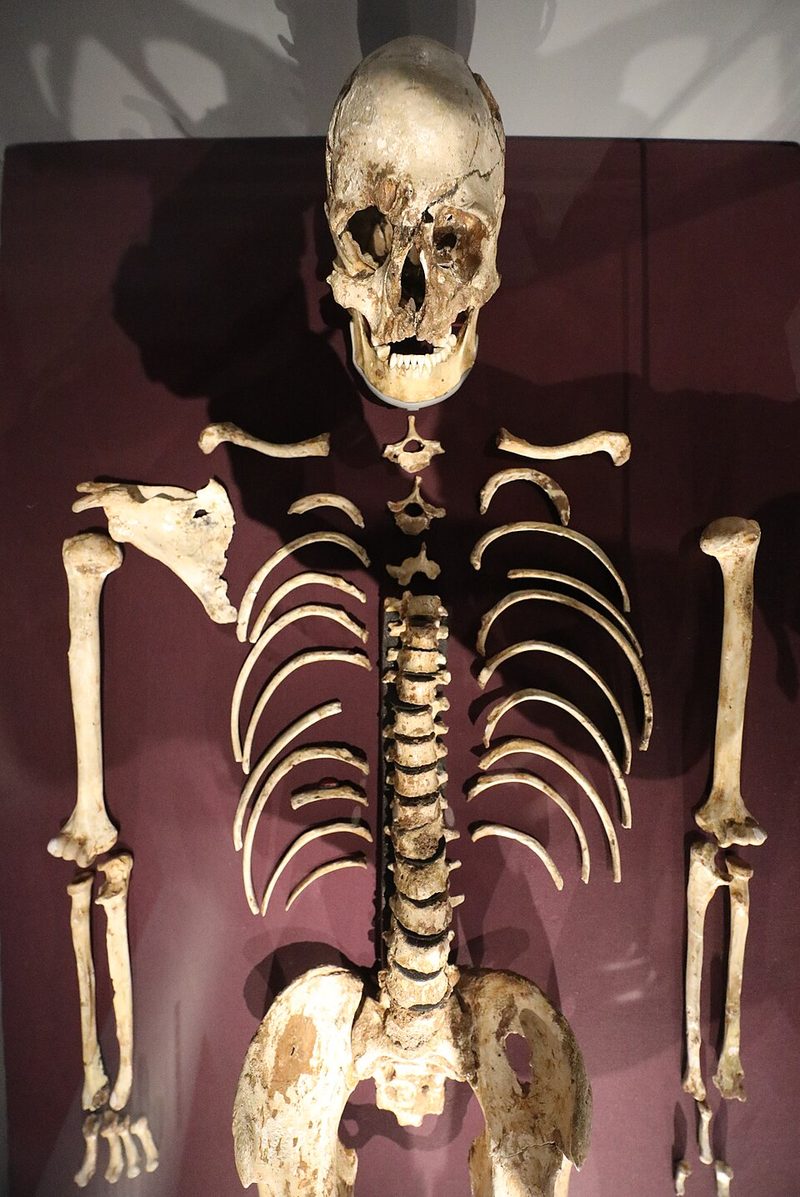
At a glance
| Discovered | 1903, in Gough's Cave, Cheddar Gorge, England |
|---|---|
| Age | Approximately 10,000 years old (Mesolithic) |
| Genome sequenced | Published in 2018 |
| Ancestry profile | Western European hunter-gatherer |
Britain's oldest nearly-complete skeleton
Cheddar Man is the oldest essentially complete human skeleton ever found in Britain, discovered in a cave system in Somerset, England. His remains predate the arrival of farming in Britain by several thousand years, making him a direct representative of the Mesolithic hunter-gatherer populations who inhabited the region before the Neolithic transition.
A famous reconstruction
Cheddar Man became widely known after a 2018 DNA-based facial reconstruction indicated he likely had dark to black skin pigmentation alongside blue eyes — a combination distinct from assumptions many people held about ancient Britons. This finding aligned with broader ancient DNA research showing that lighter skin pigmentation alleles common in Europeans today became widespread only gradually, spreading particularly with later farming and steppe-ancestry populations.
What his genome shows about ancestry
Genetically, Cheddar Man belongs to the Western European hunter-gatherer population, related to other Mesolithic individuals found across the continent from this period. This ancestral layer was later substantially, though not completely, replaced by incoming farmer and steppe-ancestry populations. See our hunter-gatherer ancestry guide for the fuller context on this population.
Why Cheddar Man matters for ancient DNA research
Cheddar Man's genome offered one of the clearest UK-specific data points showing that pigmentation traits considered "typically European" today were not fixed features of Europe's earliest post-Ice Age inhabitants, but developed and spread over thousands of subsequent years.
FAQ
Is Cheddar Man related to modern people in Britain?
He shares deep ancestral roots with modern Europeans through the Western European hunter-gatherer population, but this ancestry was substantially diluted by later farmer and steppe-ancestry migrations, so any specific individual's direct relatedness is very distant.
How confident are researchers in the skin pigmentation reconstruction?
The reconstruction is based on genetic markers strongly associated with pigmentation in modern populations, though researchers note reasonable uncertainty remains in translating ancient genetic markers into a precise visual reconstruction.