 My
MySouth Asian & Indus Valley Ancient DNA: What It Means
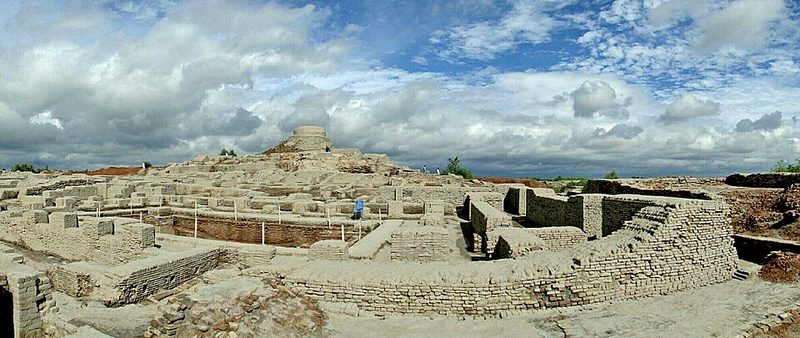
Most people with South Asian ancestry carry a mix of two deeply diverged ancestral populations, commonly referred to in the research literature as Ancestral North Indian (ANI) and Ancestral South Indian (ASI) ancestry. A third, later ingredient — Bronze Age steppe pastoralist ancestry arriving from Central Asia — helped shape the ANI side of that mixture within the last four thousand years.
| Key ancestry sources | Ancestral North Indian (ANI, related to West Eurasian and steppe ancestry) and Ancestral South Indian (ASI, deeply diverged and indigenous to the subcontinent) |
|---|---|
| Key study | Narasimhan et al., "The formation of human populations in South and Central Asia" (Science, 2019) |
| Notable ancient individual | A skeleton from Rakhigarhi, one of the largest Indus Valley Civilization sites, sequenced and published in 2019 |
| Steppe migration window | Roughly 2000-1500 BCE, contributing to later Vedic-period population change |
Two ancient roots: ANI and ASI
Population genetics research over the past decade and a half has converged on a model in which nearly all present-day South Asian populations descend from varying mixtures of two ancestral groups. Ancestral South Indian (ASI) ancestry represents a deeply diverged lineage indigenous to the subcontinent, related to some of the earliest human populations to settle South Asia after the initial migrations out of Africa. Ancestral North Indian (ANI) ancestry, by contrast, is related to West Eurasian populations and, further back, shares roots with the same broader Eurasian ancestral pool that shaped ancient European populations. The relative proportion of ANI versus ASI ancestry varies substantially across the subcontinent today, generally trending higher ANI proportions in northern and higher-caste populations and higher ASI proportions in southern and some tribal populations, reflecting a long and regionally uneven history of admixture.
The Indus Valley Civilization and the Rakhigarhi genome
The Indus Valley Civilization, one of the world's earliest urban societies, flourished across what is now Pakistan and northwest India from roughly 3300 to 1300 BCE. Ancient DNA from the civilization was notoriously difficult to recover for years due to the region's hot climate, but a breakthrough came with the sequencing of an individual from Rakhigarhi, one of the largest known Indus Valley sites, published in 2019. That genome showed ancestry consistent with a population largely predating the later steppe-ancestry migration, offering direct genetic evidence about the ancestral makeup of Indus Valley populations before the changes that followed.
The Bronze Age steppe migration into South Asia
Beginning around 2000 to 1500 BCE, ancient DNA evidence points to a significant migration of steppe pastoralist-related ancestry into South Asia from Central Asia, arriving after the decline of the Indus Valley Civilization's urban phase. This migration is one of several regional appearances of the same broader steppe ancestral expansion that also reshaped ancient European populations, covered in our Bronze Age Steppe ancestry guide. In South Asia, this incoming ancestry contributed disproportionately to the ANI side of the ANI-ASI mixture and is linked by researchers to the historical period associated with the spread of Indo-European languages across the region.
If your Ancient Origins results show South Asian ancestry
A category referencing South Asian or Indus Valley ancient ancestry generally reflects your genetic resemblance to some combination of ASI, ANI, and the later steppe-ancestry layer described above, rather than a single uniform ancient population. Because the exact ANI-ASI ratio varies so substantially by region within South Asia itself, two people with South Asian ancestry can show meaningfully different ancient-origins percentages even when both trace their family history to the same country today. See our explainer on ancient DNA testing for background on how these population-level comparisons work generally.
South Asian ancestry vs. other ancient categories
Because ANI ancestry shares a deep root with the same West Eurasian ancestral pool discussed in our Early European Farmer and Bronze Age Steppe guides, some ancient-origins panels may show a distant statistical connection between South Asian results and Western Eurasian ancient categories, particularly through the shared steppe-ancestry layer. ASI ancestry, by contrast, is deeply diverged from all of these and is not closely related to any other category covered on this site.
What does "ANI" and "ASI" mean?
Ancestral North Indian (ANI) and Ancestral South Indian (ASI) are labels used in population genetics research to describe two deeply diverged ancestral populations whose mixture, in varying proportions, accounts for most South Asian ancestry today. ANI ancestry is related to West Eurasian populations; ASI ancestry is indigenous to the subcontinent and not closely related to populations outside South Asia.
Does this mean I'm descended from the Indus Valley Civilization specifically?
A match to this category reflects broad genetic resemblance to ancient South Asian ancestral populations, which does include ancestry patterns documented in Indus Valley Civilization-era individuals like the sequenced Rakhigarhi genome. It's a population-level statistical resemblance, not a documented genealogical line to a specific historical city or civilization.