 My
MySub-Saharan African Ancient DNA: What It Means
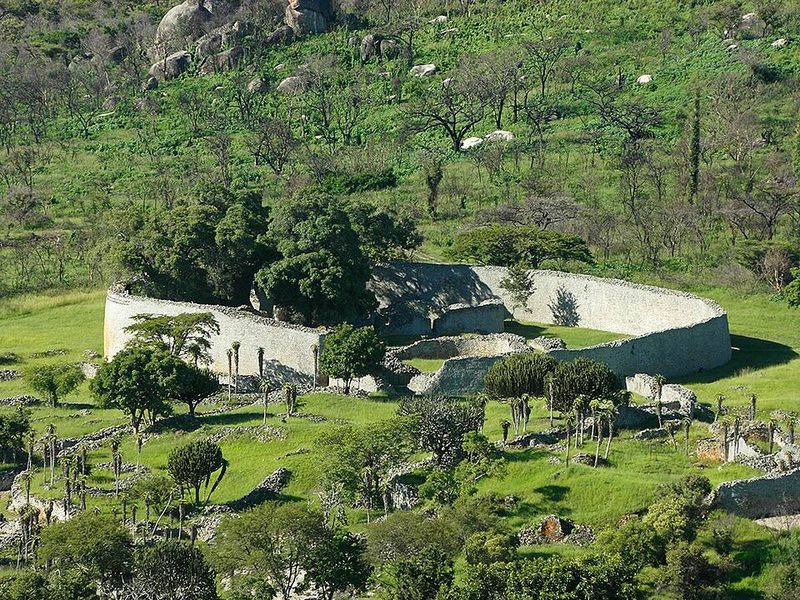
Africa holds the deepest and most genetically diverse human population history of anywhere on Earth, yet its ancient-DNA record is one of the most recently developed, mainly because hot, humid conditions across much of the continent degrade DNA far faster than the cold environments that preserved much of the early European record.
| Genetic diversity | Sub-Saharan African populations carry more overall human genetic diversity than the rest of the world's population combined, reflecting the deepest branches of the human family tree |
|---|---|
| Key study | Skoglund et al., "Reconstructing Prehistoric African Population Structure" (Cell, 2017) |
| Notable ancient sites | Ballito Bay, South Africa (~2,000 years old); Malawi rock shelter sites (several thousand years old) |
| Major later migration | The Bantu expansion, spreading agriculture and associated ancestry across much of sub-Saharan Africa over roughly the last 3,000-4,000 years |
The deepest branches of the human family tree
Because anatomically modern humans originated in Africa, the continent's populations carry the deepest and most structurally diverse genetic lineages found anywhere in the world — a 2017 study published in Cell found that indigenous African groups collectively carry more genetic diversity than the rest of the global population combined. That diversity reflects tens of thousands of years of population structure that predates, and in some lineages runs parallel to, the migrations that eventually populated the rest of the world.
Ballito Bay, Malawi, and the growing ancient-DNA record
Ancient DNA research in sub-Saharan Africa expanded significantly with the successful sequencing of individuals from sites including Ballito Bay in South Africa, roughly 2,000 years old, and several rock shelter sites in Malawi spanning thousands of years. These genomes, alongside a small but growing number of other African ancient samples, have allowed researchers to begin reconstructing population movements and mixture events that were previously visible only indirectly, through comparison of present-day populations. Because the number of successfully sequenced ancient African genomes remains far smaller than the European or even South Asian record, this remains one of the most actively developing areas of ancient-DNA research.
The Bantu expansion
One of the most significant population movements documented in the region's more recent genetic history is the Bantu expansion — a gradual spread of Bantu-speaking, agriculture-practicing populations that began in West-Central Africa and, over roughly the past 3,000 to 4,000 years, spread ancestry, language, and farming technology across much of central, eastern, and southern Africa. This expansion is one of the clearest examples of how the arrival of agriculture reshaped ancestry patterns across a continent, echoing the broader pattern seen with early farmer expansions in other world regions covered in our Early European Farmer guide.
If your Ancient Origins results show Sub-Saharan African ancestry
Because the ancient reference panel for the region is still comparatively young, a category referencing sub-Saharan African ancestry in a consumer ancient-origins panel is more likely to be built primarily from present-day population comparisons than from a dense set of dated archaeological genomes, unlike some longer-studied Western Eurasian categories. Coverage, category naming, and precision for specific regional populations within sub-Saharan Africa can vary meaningfully between providers as a result. See our explainer on ancient DNA testing for background on how these comparisons work generally, and keep in mind that a broad regional category here may understate the genuine ethnolinguistic and genetic diversity within the continent itself.
Sub-Saharan African ancestry vs. other ancient categories
Because African populations sit at the root of the human family tree, sub-Saharan African ancestry is genetically foundational rather than closely related to any single non-African category on this site. For background on the deep-time migrations that eventually split off the ancestral populations behind categories like Bronze Age Steppe or East Asian ancestry, see our explainer on what ancient DNA testing actually measures.
Why is there less ancient DNA data for Africa than for Europe?
DNA degrades faster in hot, humid climates, and much of sub-Saharan Africa has historically posed preservation challenges for ancient genetic material. Improvements in extraction techniques over the past decade have expanded the number of successfully sequenced ancient African genomes, but the reference panel remains smaller and younger than the well-established European one.
Does a single "Sub-Saharan African" category capture the region's real diversity?
Not fully. Sub-Saharan Africa contains more human genetic diversity than the rest of the world combined, spread across many distinct populations and language families. A single broad ancient-origins category is a simplification driven by current reference-panel limitations, not a claim that the region's populations are genetically uniform.