 My
MyHaplogroup J2 Explained: What It Means & Where It's From
Quick answer: Haplogroup J2 is a Y-chromosome lineage that diversified around the Caucasus, Anatolia, or Western Iran roughly 19,000–24,000 years ago and later spread with the Neolithic farming expansion. It's most common today in the Caucasus, parts of the Near East, and around the Mediterranean, with meaningful frequencies as far as South Asia and Central Asia.
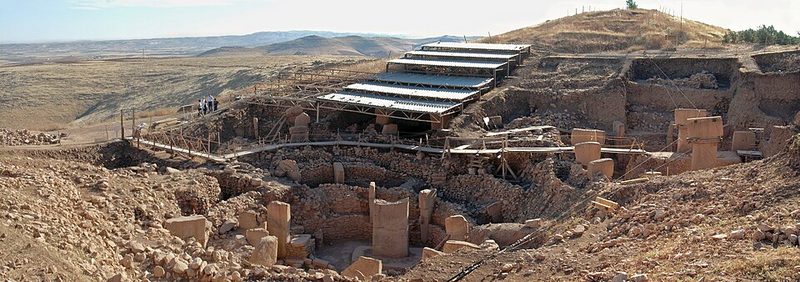
Haplogroup J2 is closely tied to the Near East and the spread of early agriculture, making it one of the clearest Y-DNA signals of the Neolithic farming expansion into Europe and beyond.
At a glance
| Type | Y-DNA (paternal line) |
|---|---|
| Estimated age | Diversified roughly 15,000–20,000 years ago in the Near East, with major expansion during the Neolithic |
| Modern peak frequency | Anatolia, the Caucasus, the Levant, Mesopotamia, and parts of the Mediterranean and South Asia |
| Key ancient association | Early Near Eastern farming populations and their westward Neolithic expansion |
A Near Eastern origin
J2 is believed to have diversified in or near the Fertile Crescent, the region where agriculture first developed. As farming populations expanded outward from this region roughly 8,000–9,000 years ago, they carried J2 (alongside other lineages like haplogroup G) into Europe, gradually mixing with resident hunter-gatherer populations. See our Early European Farmer ancestry guide for the broader migration story.
A lasting Mediterranean signature
Today J2 remains most common around the Mediterranean basin, the Caucasus, and parts of the Near East and South Asia, reflecting both its original range and the reach of later Bronze Age and Classical-era population movements, including those touched on in our Roman-era ancestry guide.
Major subclades and where they're common today
J2 splits into two main branches, J2a and J2b, which are usually what a DNA testing company reports rather than "J2" alone:
| Subclade | Where it's most common |
|---|---|
| J2a (J-M410) | The larger branch, widespread from the Caucasus and Near East through the Mediterranean into parts of South and Central Asia |
| J2b (J-M12) | A smaller, more geographically patchy branch found in parts of the Balkans, Near East, and South Asia |
Population studies show just how concentrated J2 is in the Caucasus: over 85% of Ingush men and roughly half of Chechen men carry it, with Georgian samples ranging from about 21% to 72%. Elsewhere it reaches double digits among Lebanese (~30%), Iraqis (~24%), Syrians (~23%), Turks (13–40% depending on region), Greeks (10–48% regionally), and Italians (9–36% regionally), with smaller but notable frequencies in Central and South Asia.
What carrying J2 means — and doesn't mean
A J2 result reflects a single ancient paternal line associated with the Near East and the spread of farming, not a complete ancestry picture. See our full explainer on how Y-DNA and mtDNA haplogroups work for context.
FAQ
Is J2 the same as haplogroup J1?
No. J1 and J2 are separate branches of the broader J haplogroup with different geographic histories — J1 is more associated with the Arabian Peninsula and parts of the Near East, while J2 is more closely tied to the Neolithic farming expansion.
Does J2 mean I have ancient farmer ancestry?
It suggests your direct paternal line likely traces to Near Eastern populations associated with early agriculture, but your overall genome-wide ancestry could include many other ancestral sources as well.
What does haplogroup J2 mean for my ancestry?
It means your direct paternal line traces back to a lineage that diversified in the Caucasus, Anatolia, or Western Iran roughly 19,000-24,000 years ago and later spread with early farming populations. Its two main branches, J2a and J2b, have somewhat different regional histories, so a more specific subclade result narrows the picture further.
Is J2 rare or common?
J2 is common in the Caucasus, the Near East, and parts of the Mediterranean and South Asia. It reaches its highest frequencies among the Ingush (over 85%) and other Caucasus populations, and is found at double-digit percentages among Lebanese, Iraqi, Turkish, Greek, and Italian men.