 My
MyÖtzi the Iceman: What His DNA Reveals
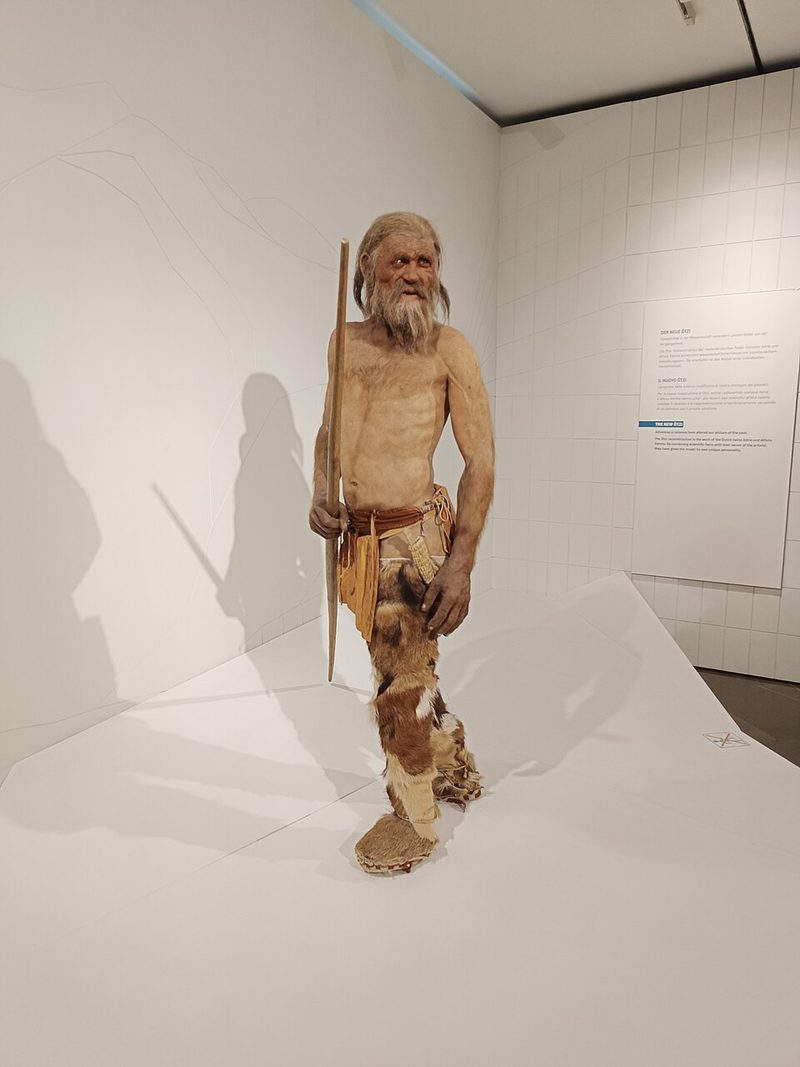
At a glance
| Discovered | 1991, in the Ötztal Alps on the Austrian-Italian border |
|---|---|
| Age | Approximately 5,300 years old (Copper Age / Chalcolithic) |
| Genome sequenced | Full genome published in 2012 |
| Ancestry profile | Predominantly Early European Farmer ancestry, with little to no detectable steppe ancestry |
A remarkably preserved Copper Age man
Ötzi's body was naturally mummified in ice shortly after his death, preserving not just his skeleton but skin, organs, clothing, and equipment in extraordinary detail. This preservation made him one of the most thoroughly studied individuals in the ancient DNA record, offering a rare direct genetic snapshot of Copper Age Europe before the later Bronze Age steppe migrations arrived.
What his genome shows
Genetic analysis places Ötzi's ancestry firmly within the Early European Farmer population that had spread across Europe from Anatolia roughly 4,000 years before his lifetime — the same ancestral layer covered in our Early European Farmer ancestry guide. Notably, his genome shows essentially no steppe-related ancestry, confirming that the Yamnaya-related migrations discussed in our Bronze Age Steppe ancestry guide had not yet reached his region during his lifetime.
Health and appearance from ancient DNA
Ötzi's genome also revealed a predisposition to cardiovascular disease, lactose intolerance (consistent with a pre-dairying population), and Lyme disease infection at the time of his death. Combined with isotope analysis of his teeth and bones, researchers reconstructed a detailed picture of his diet, health, and even his likely cause of death — an arrow wound, making his death one of the oldest documented homicides.
Why Ötzi matters for ancient DNA research
As one of the earliest and most complete ancient genomes ever sequenced, Ötzi helped establish many of the analytical methods still used in ancient DNA research today, and remains a key reference point for understanding pre-Bronze Age European population structure.
FAQ
Did Ötzi have any steppe ancestry?
No. His genome shows essentially no detectable steppe-related ancestry, consistent with his lifetime predating the major Yamnaya-related migrations into Europe by several centuries.
What haplogroups did Ötzi carry?
Ötzi's Y-DNA belongs to haplogroup G2a, a lineage strongly associated with Early European Farmer populations, and his mtDNA belongs to a now-rare subclade of haplogroup K1.