 My
MyScottish DNA Ancestry: What Your Results Actually Show
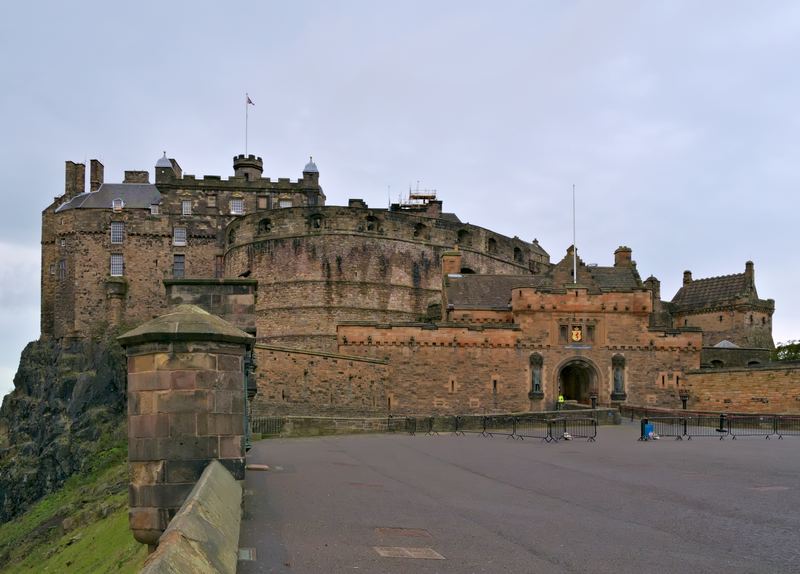
A "Scottish" result on a DNA test reflects genetic similarity to present-day reference populations sampled from Scotland — it doesn't map onto a single ancient people. Scotland's population formed from a distinctive blend of prehistoric groups, Pictish and Gaelic kingdoms, and later Norse and Anglo-Norman influence, layered onto the deep genetic baseline shared across the British Isles.
At a glance
| Reference type | Modern population comparison, not a direct ancient-DNA match |
|---|---|
| Deep ancestral layers | Hunter-gatherer, Early European Farmer, and Bronze Age steppe ancestry, in roughly that chronological order |
| Key historical layers | Pictish and Gaelic kingdoms of early medieval Scotland, Norse settlement in the north and islands, and later Anglo-Norman influence |
The deep layers beneath "Scottish" ancestry
Like the rest of Britain, Scotland's population descends from three major prehistoric waves: Mesolithic hunter-gatherers, Neolithic farmers from the Near East, and Bronze Age steppe migrants. See our guides to hunter-gatherer ancestry, Early European Farmer ancestry, and Bronze Age Steppe ancestry for how each layer shaped the deep genetic baseline shared across the British Isles.
Picts, Gaels, and the kingdom of Scotland
In the early medieval period, what is now Scotland was home to several distinct groups: the Picts in the north and east, whose language and origins remain only partly understood, and Gaelic-speaking Scots who arrived from Ireland and settled the west, eventually giving Scotland its name. These groups, along with Britons in the south and Angles in the southeast, gradually merged into the medieval kingdom of Scotland — part of the broader Celtic-influenced world covered in our Celtic ancestry guide.
Norse settlement in the north and islands
From the 8th century onward, Norse settlers established a lasting presence across Orkney, Shetland, the Hebrides, and parts of the northern and western mainland — part of the same Norse expansion covered in our Viking-era ancestry guide. Genetic studies show measurably higher Norse-associated ancestry in these regions today compared to the Scottish mainland further south, a pattern that persists over a thousand years later.
Regional variation within Scotland
Scotland shows clear regional genetic structure: the Northern Isles (Orkney and Shetland) carry the strongest Norse-associated signal, the Highlands and Western Isles retain more Gaelic-associated ancestry, and the Lowlands show relatively more overlap with northern English populations due to centuries of cross-border movement. A single national "Scottish" percentage on a DNA test averages over this regional patchwork.
Why "Scottish" DNA isn't a fixed category
Modern national and ethnic labels are a poor proxy for ancient population boundaries. A DNA test result showing "Scottish" ancestry reflects statistical similarity to a modern reference sample shaped by many centuries of relatively stable population structure — not a documented genetic line back to Picts, Gaels, or Norse settlers specifically.
FAQ
Does "Scottish" ancestry on a DNA test mean I belong to a specific clan?
Not directly. DNA ethnicity results reflect broad genetic similarity to a modern regional reference population, not membership in a historical clan, which was a social and political affiliation rather than a strict genetic lineage. A Y-DNA test can sometimes offer clues relevant to surname-based clan research along a single paternal line — see our haplogroups guide for how that works.
Why do Scottish results sometimes include Scandinavian or Irish ancestry too?
This is common and expected, especially for people with ancestors from the Northern Isles, the Hebrides, or the west coast, given Scotland's long history of Norse settlement and close ties with Gaelic Ireland.