 My
MyHaplogroup E-M35 Explained: What It Means & Where It's From
Quick answer: Haplogroup E-M35 (also written E1b1b) is a Y-chromosome lineage that diversified in the Horn of Africa roughly 25,000 years ago. It's now one of the most common paternal haplogroups across Africa, and its branches also reach high frequencies among Berbers in North Africa and in parts of the Mediterranean, including Sicily, Greece, and the Balkans.
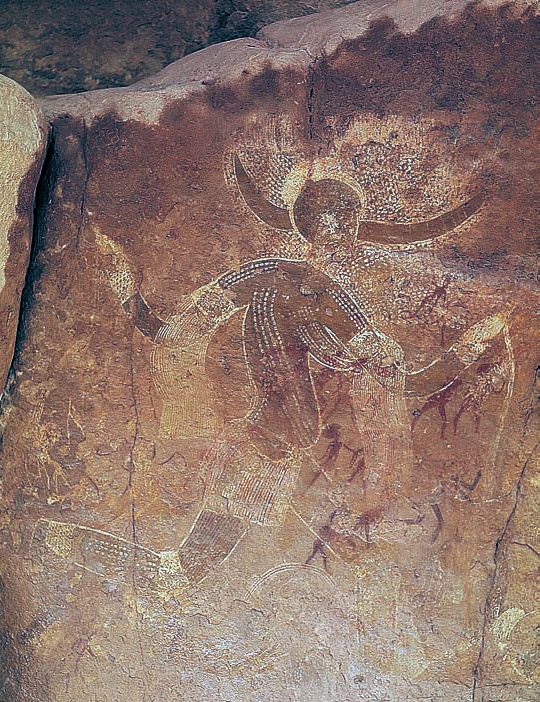
Haplogroup E is one of the most widely distributed Y-DNA haplogroups in the world, with its E-M35 subclade found from Sub-Saharan Africa to the Mediterranean and the Horn of Africa, reflecting a long and complex migratory history.
At a glance
| Type | Y-DNA (paternal line) |
|---|---|
| Estimated age | Broader haplogroup E originated in Africa tens of thousands of years ago; E-M35 diversified roughly 15,000–20,000 years ago |
| Modern peak frequency | Widespread across Africa; also common in the Horn of Africa, North Africa, and parts of the Mediterranean and Near East |
| Key ancient association | African origins, later carried into the Mediterranean and Near East through multiple prehistoric and historic migrations |
An African origin with wide reach
Haplogroup E is believed to have originated in Africa, with the E-M35 branch specifically associated with populations in the Horn of Africa and surrounding regions before spreading further. Its presence around the Mediterranean and in parts of the Near East reflects ancient migrations connecting Africa to these neighboring regions over thousands of years. See our Sub-Saharan African ancestry guide and Ancient Egyptian DNA guide for related regional context.
A genetically diverse haplogroup
Because E-M35 covers such a wide geographic range, it includes many distinct sub-branches with different regional histories — a reminder that a shared top-level haplogroup doesn't necessarily mean two people share recent common ancestry on that line.
Major subclades and where they're common today
E-M35's two largest branches have quite different geographic centers of gravity, which is why testing companies usually report a more specific subclade rather than just "E-M35" on its own:
| Subclade | Where it's most common |
|---|---|
| E-M78 | Peaks in parts of the Balkans and Sicily (up to ~50%); also common in the Horn of Africa and declining gradually toward western and northeastern Europe |
| E-M81 | The dominant Y-DNA lineage of the Maghreb, reaching 80–100% among some Berber populations; averages around 61% across North Africa |
Frequencies documented in population genetics studies illustrate just how common this haplogroup is in some regions: around 25–100% of Somali men (depending on the study population), roughly 45% of the Amhara of Ethiopia, and double digits among Egyptians (up to the high 70s% in some southern Egyptian samples), Greeks (~28%), and southern Italians (~16%).
What carrying E-M35 means — and doesn't mean
An E-M35 result reflects one specific paternal line with deep African roots and a wide historical range; it doesn't by itself indicate which specific region your direct paternal ancestors came from without finer subclade testing. See our full explainer on how Y-DNA and mtDNA haplogroups work.
FAQ
Does E-M35 mean my ancestors were Egyptian?
Not necessarily. E-M35 is found across a very wide area including much of Africa, the Horn of Africa, parts of the Mediterranean, and the Near East, so it doesn't pinpoint a single ancient civilization without more specific subclade information.
Why is E-M35 found in both Africa and the Mediterranean?
Multiple prehistoric and historic migrations connected Africa to the Mediterranean and Near East over many thousands of years, carrying this lineage (and others) across the region in both directions.
What does haplogroup E-M35 mean for my ancestry?
It means your direct paternal line traces back to a lineage that diversified in the Horn of Africa roughly 25,000 years ago and later spread across Africa, the Mediterranean, and the Near East. Which specific branch you belong to (such as E-M78 or E-M81) narrows this down considerably, since different subclades have very different regional histories.
Is E-M35 rare or common?
E-M35 and its branches are common rather than rare. They are the majority Y-DNA haplogroup among Somali and Berber men, reach roughly 45% among the Amhara of Ethiopia, and are found at double-digit frequencies among Egyptians, Greeks, and southern Italians.