 My
MyNorwegian DNA Ancestry: What Your Results Actually Show
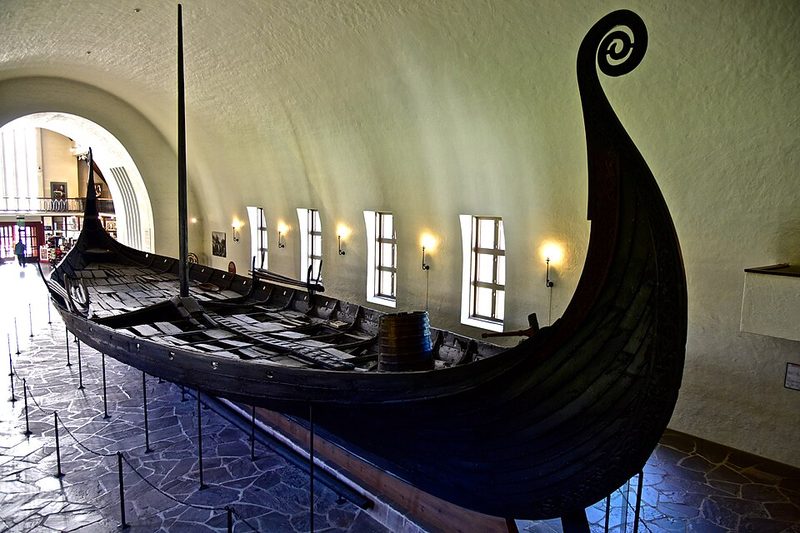
A "Norwegian" result on a DNA test reflects genetic similarity to present-day reference populations sampled from Norway — it isn't a confirmation of descent from Viking-age raiders or a single ancient ethnic group. Norway's population history runs from the first postglacial hunter-gatherers who reached its coastline, through Bronze Age steppe migration, into the Viking Age and centuries of regional variation between coastal, fjord, and northern Sámi-influenced communities.
At a glance
| Reference type | Modern population comparison, not a direct ancient-DNA match |
|---|---|
| Deep ancestral layers | Postglacial hunter-gatherer, Early European Farmer, and Bronze Age steppe ancestry, in roughly that chronological order |
| Key historical layer | Viking-age (793–1066 CE) Norse expansion westward to Britain, Ireland, Iceland, and Greenland |
| Common Y-DNA haplogroup | I1 is unusually frequent in Norway, alongside R1b and R1a |
The deep layers beneath "Norwegian" ancestry
Norway was one of the last parts of Europe to be resettled after the last Ice Age, as hunter-gatherer groups followed the retreating ice northward along the coast roughly 11,000 years ago. Ancient-DNA studies show these early Scandinavian hunter-gatherers carried a mix of ancestry from two source populations — one arriving from the south along the coast, another from the northeast via a route around the Baltic — making Norway's earliest known ancestry layer more genetically composite than in much of the rest of Europe. Neolithic farming and, later, Bronze Age steppe migration arrived comparatively late in Scandinavia. See our guides to hunter-gatherer ancestry, Early European Farmer ancestry, and Bronze Age Steppe ancestry for how each layer contributed.
Viking-age Norway and westward expansion
The largest ancient-DNA study of the Viking world, published in Nature in 2020, found meaningful genetic differences between Danish, Norwegian, and Swedish Viking populations that generally track their different raiding and settlement patterns. Norwegian Vikings voyaged mainly westward — to Ireland, Scotland, the Isle of Man, Iceland, Greenland, and briefly on to North America — while Danish Vikings focused on England and Western Europe, and Swedish Vikings pushed east toward Russia and the Byzantine world. That westward reach is why Norwegian-associated ancestry turns up today in parts of Scotland, Ireland, and especially Iceland, which was substantially settled by Norwegian Vikings and the people they brought with them. Our full Viking-era Scandinavian ancestry guide covers what the underlying research shows about the Viking world as a whole.
Haplogroup I1 and Norwegian Y-DNA
Y-DNA haplogroup I1 reaches some of its highest frequencies anywhere in the world in Norway and the rest of Scandinavia. Geneticists think I1 descends from a small founding population that expanded rapidly in Scandinavia during the Bronze Age after a genetic bottleneck, rather than from a large ancestral population — which is part of why it's comparatively rare outside Northern Europe today. R1b and R1a are also common among Norwegian men, reflecting the broader Bronze Age steppe migration layer shared across much of Europe. See our guide to haplogroup I1 origins for more on how this lineage is thought to have spread.
Sámi ancestry and regional variation within Norway
Norway isn't genetically uniform from south to north. The Sámi, an Indigenous people of northern Norway, Sweden, Finland, and Russia's Kola Peninsula, have a distinct genetic history that includes ancestry components linked to ancient populations from further east, alongside the same deep hunter-gatherer layer found elsewhere in Scandinavia. People from Norway's northern counties, such as Finnmark and Troms, are more likely to carry a detectable degree of Sámi-associated ancestry than people from southern Norway, which is one reason DNA results for people with Norwegian ancestry can vary meaningfully depending on which part of the country their family comes from.
Why "Norwegian" DNA isn't a fixed category
Modern national borders are a poor proxy for ancient population boundaries. A DNA test showing "Norwegian" ancestry reflects statistical similarity to a modern reference sample shaped by the last few centuries of relatively stable population structure — not a direct genetic link to any specific Viking-age individual or a single unbroken lineage. Because Norway, Sweden, and Denmark share so much of their deep ancestral history, and were politically united for long stretches (including the Kalmar Union and the Denmark–Norway union that lasted until 1814), it's common and expected for results to show overlapping Scandinavian signals rather than a single clean-cut national category.
FAQ
Does "Norwegian" ancestry on a DNA test mean I'm descended from Vikings?
Not necessarily. "Norwegian" reflects similarity to a modern reference population, and ancient DNA shows that Viking-age Scandinavia, including Norway, was itself genetically diverse. A Norwegian result says something about recent population history, not a confirmed lineage back to a specific Viking-age raider or settler.
Why do Norwegian, Swedish, and Danish results often overlap?
Norway, Sweden, and Denmark share the same deep ancestral layers — hunter-gatherer, farmer, and Bronze Age steppe — and have a long history of intermarriage and political union, including centuries under shared Scandinavian monarchies. That shared history means genetic boundaries between the three countries rarely line up neatly with their modern borders.