 My
MyIrish DNA Ancestry: What Your Results Actually Show
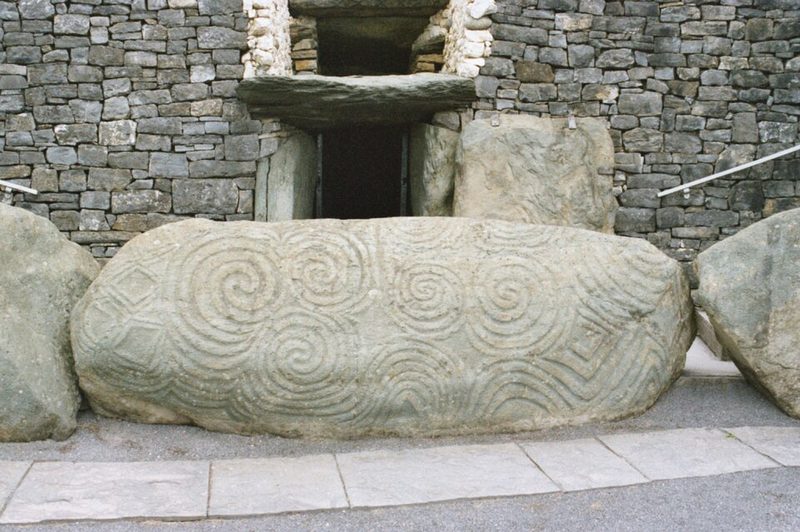
Ireland has one of the more distinctive genetic profiles in Western Europe, shaped by its island geography, a dramatic Bronze Age population turnover, and comparatively limited (though real) later admixture from Viking and Norman settlers.
At a glance
| Reference type | Modern population comparison, not a direct ancient-DNA match |
|---|---|
| Deep ancestral layers | Hunter-gatherer, Neolithic farmer (megalith-building), and a major Bronze Age steppe-derived population turnover |
| Key historical layer | Bell Beaker-associated Bronze Age migrants, later Viking (9th–11th century) and Norman (12th century) input |
The megalith builders
Ireland's Neolithic population, ancestors of the people who built megalithic monuments like Newgrange, was descended primarily from Early European Farmer ancestry, itself traceable back to Anatolian farming populations that spread across Europe. See our Early European Farmer ancestry guide for that migration.
A dramatic Bronze Age turnover
Ancient DNA from Bronze Age Irish burials shows an extraordinarily high degree of genetic replacement associated with the arrival of Bell Beaker-associated, steppe-descended populations — among the most complete population turnovers documented anywhere in ancient DNA research, closely tied to the same R1b Y-DNA expansion discussed in our Haplogroup R1b guide and our Bronze Age Steppe ancestry guide.
Later, smaller-scale input
Viking settlement from the 9th century and Norman settlement from the 12th century added further, more modest layers of ancestry, particularly detectable in coastal and urban areas with historical Norse or Norman settlement. See our Viking ancestry guide for that chapter.
FAQ
Why does Irish ancestry often show high R1b Y-DNA frequency?
Ireland experienced one of the most complete Bronze Age population turnovers documented in ancient DNA, closely tied to Bell Beaker-associated migrants who carried R1b at very high frequency, which persists in the modern Irish population today.
How much Viking ancestry do most Irish people actually have?
Generally a modest amount, concentrated more in populations with historical ties to Viking-founded settlements like Dublin, Cork, and Limerick, rather than evenly distributed across the whole island.