 My
MyPolynesian & Pacific Islander Ancient DNA: What It Means
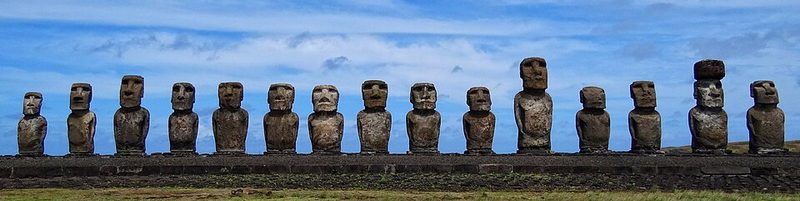
Polynesian ancestry traces to one of the most remarkable migrations in human history: a seafaring expansion that, over roughly three thousand years, carried Austronesian-speaking populations from the vicinity of Taiwan across the vast distances of the Pacific Ocean, eventually reaching Hawaii, New Zealand, and Easter Island — three points that together enclose an area covering roughly a tenth of the Earth's surface.
| Origin point | Ancestral Austronesian-speaking populations linked to Taiwan and the Philippines, beginning to expand roughly 5,000 years ago |
|---|---|
| Key study | Skoglund et al., "Genomic insights into the peopling of the Southwest Pacific" (Nature, 2016) |
| Key ancestry mixture | Austronesian ancestry combined with Papuan-related ancestry, acquired through contact in the Bismarck Archipelago and nearby regions |
| Associated ancient culture | The Lapita culture, identified by distinctive dentate-stamped pottery, spreading from roughly 3,000 years ago |
The Austronesian expansion out of Taiwan
Linguistic, archaeological, and genetic evidence together point to Taiwan as the ancestral homeland of the Austronesian language family, the broad linguistic group that includes Polynesian, Melanesian, and many Southeast Asian languages today. Beginning roughly 5,000 years ago, populations carrying Austronesian ancestry began a maritime expansion first through the Philippines and Indonesia, then further out into the Pacific — a movement made possible by increasingly sophisticated outrigger canoe technology and navigational skill.
The Lapita culture and Papuan admixture
As Austronesian-ancestry populations moved through the Bismarck Archipelago near New Guinea roughly 3,000 years ago, they encountered and mixed with populations carrying Papuan-related ancestry, whose own ancestors had inhabited New Guinea and nearby islands for tens of thousands of years — among the oldest continuous human occupations outside Africa. This mixture produced the ancestral population associated with the Lapita culture, identified archaeologically by its distinctive dentate-stamped pottery, which then continued the migration further east into Remote Oceania — the vast, previously uninhabited swath of the Pacific that includes Fiji, Tonga, Samoa, and eventually the entire Polynesian triangle.
Reaching the far corners of the Polynesian triangle
From a Western Polynesian staging ground around Tonga and Samoa, later voyages carried Austronesian-Papuan ancestry to the most remote inhabited islands on Earth: Hawaii to the north, Easter Island (Rapa Nui) to the east, and New Zealand (Aotearoa) to the south — the last major landmass on the planet to be settled by humans, roughly 700 to 800 years ago. Genetic studies of present-day and ancient Pacific populations show a broadly consistent Austronesian-Papuan ancestry signature across this entire region, with the specific ratio of the two components varying somewhat by island group depending on the exact migration route and later contact.
If your Ancient Origins results show Polynesian or Pacific Islander ancestry
A category referencing Polynesian or broader Pacific Islander ancient ancestry generally reflects genetic resemblance to this combined Austronesian-Papuan ancestral population that spread across the Pacific over the last three millennia, rather than a single unmixed ancestral group. Because remote Pacific populations remained genetically distinct from continental populations for so long, given the sheer ocean distances involved, this ancestry is usually clearly identifiable in a reference panel when it's included at all — though coverage of specific Pacific Islander populations still varies more between providers than for longer-studied categories. See our explainer on ancient DNA testing for background on how these comparisons are calculated generally.
Polynesian ancestry vs. other ancient categories
Because Austronesian ancestry traces ultimately back through East Asia before the Pacific expansion began, some ancient-origins panels may show a distant statistical relationship between Polynesian results and the broader East Asian ancient ancestry category. The Papuan-related component, by contrast, reflects one of the oldest population lineages outside Africa and is not closely related to any other category covered on this site.
Are Polynesian and Melanesian ancestry the same thing?
No, though they're related. Both trace partly to Austronesian ancestral populations, but Melanesian populations, particularly in New Guinea, generally carry a much higher proportion of the deep Papuan-related ancestry component and correspondingly less Austronesian ancestry than most Polynesian populations further east.
Why is Denisovan ancestry often highest in Pacific populations?
Papuan and some other Pacific populations carry the highest known levels of Denisovan ancestry in the world, generally cited at around 4-6% of the genome — a legacy of interbreeding between early modern humans and Denisovans as populations moved through the region tens of thousands of years ago. See our Denisovan DNA explainer for the full picture.