 My
MyFamous Ancient DNA Discoveries
Some of the most compelling ancient-DNA stories aren't statistical population breakdowns — they're individual detective stories, where genetic analysis identified a specific historical figure, overturned assumptions about how they looked, or confirmed identities that had been debated for centuries. MyHeritage's Ancient Origins even has a dedicated "Notable Individuals" report that compares your own DNA to a set of historical figures like these, for Complete and Omni subscribers.
Ötzi: full DNA deep-dive
A dedicated look at Ötzi's genome, health, and ancestry.
Read the deep-dive →Cheddar Man: full DNA deep-dive
A dedicated look at Cheddar Man's genome and reconstruction.
Read the deep-dive →Ötzi the Iceman
Discovered by hikers in 1991 in the Ötztal Alps along the Italy-Austria border, Ötzi is Europe's oldest known naturally mummified human, dating to roughly 3300 BCE — around 5,300 years old. Because his body was preserved in glacial ice almost immediately after death, researchers have been able to extract an unusually complete genome. A detailed 2023 reanalysis, published in Cell Genomics, overturned an earlier assumption that Ötzi had a mixed hunter-gatherer and steppe-related ancestry — instead finding his genome was overwhelmingly derived from early Anatolian farmer ancestry, with minimal admixture from other groups, and traits closer to populations from Sardinia and Corsica than mainland Europeans. His DNA also revealed a predisposition to conditions like atherosclerosis, type O blood, lactose intolerance, and — from bacterial DNA found in his remains — the earliest documented case of Lyme disease. Scientific consensus is that he was killed by an arrow wound. See our full Ötzi the Iceman DNA deep-dive for more.
Cheddar Man
Found in 1903 in Cheddar Gorge, Somerset, England, this roughly 10,000-year-old skeleton is one of Britain's oldest near-complete human remains, dating to the Mesolithic period — making him a member of the Western Hunter-Gatherer population that lived in Britain before farming arrived. A 2018 DNA analysis led by the Natural History Museum in London produced a striking finding: Cheddar Man likely had dark to black skin combined with blue eyes, a combination that challenged long-standing assumptions that pale skin had already become widespread among Mesolithic Europeans. The study became one of the most widely reported ancient-DNA findings of the decade, illustrating how far ancient genetics can diverge from intuitive assumptions about the past. See our full Cheddar Man DNA deep-dive for more.
Richard III
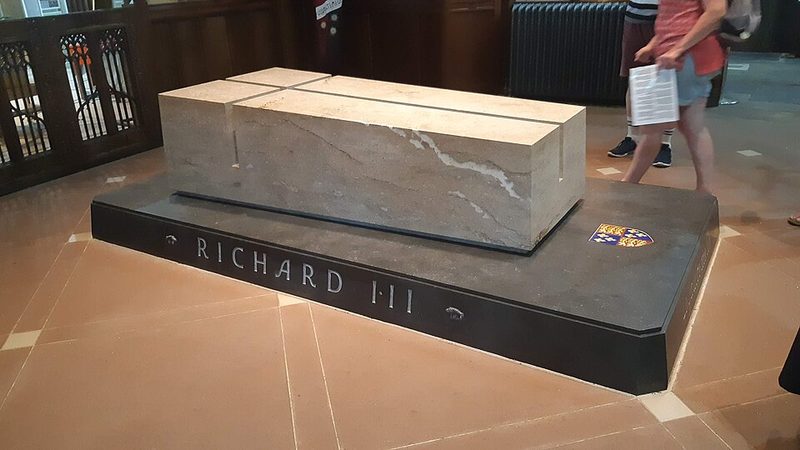
King Richard III of England died at the Battle of Bosworth Field in 1485, and the location of his remains was lost for over 500 years — until a skeleton was excavated from beneath a Leicester city council parking lot in 2012. Researchers confirmed the remains were Richard III through a combination of skeletal analysis (including scoliosis and battle wounds matching historical accounts) and a mitochondrial DNA match to living matrilineal descendants, announced in 2013 — one of the clearest cases of ancient DNA definitively identifying a specific named historical figure. Interestingly, Y-DNA analysis of the male-line descendants expected to match Richard III's paternal line found a mismatch, suggesting a "false paternity" event (a break in the recorded father-to-son line, such as an undocumented adoption or infidelity) occurred somewhere in the intervening generations of English royal genealogy.
Tutankhamun
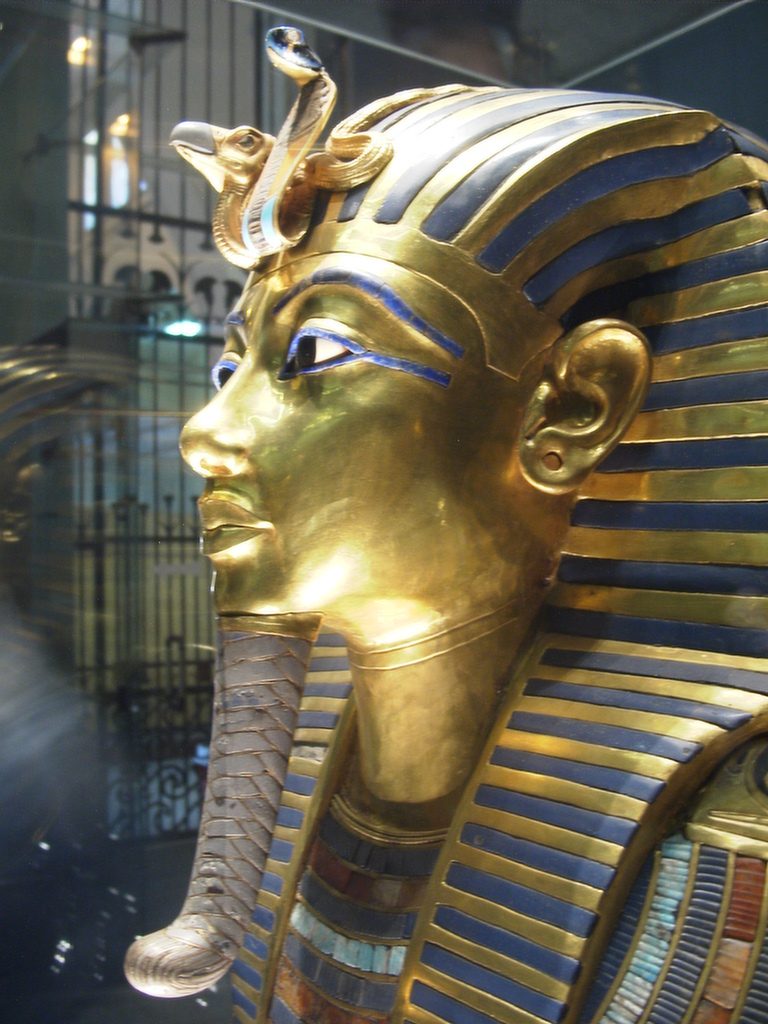
Egypt's most famous pharaoh, who ruled from roughly 1332 to 1323 BCE and whose nearly intact tomb was discovered by Howard Carter in 1922, was the subject of a landmark 2010 DNA study published in JAMA. The analysis found strong genetic evidence that Tutankhamun's parents were full siblings — consistent with the extensive intra-family marriage practiced within Egypt's 18th dynasty royal line — and helped identify his likely father as the pharaoh Akhenaten. The same study detected DNA from the malaria parasite in Tutankhamun's remains, suggesting that malaria, combined with a broken leg and other health complications linked to his parents' close relation, likely contributed to his early death at around age 19. See our Ancient Egyptian ancestry page for the broader genetic picture of ancient Egypt beyond this one royal lineage.
Other notable cases
These four are far from the only individually identified ancient genomes. The Birka female warrior — a Viking-age burial in Sweden long assumed to belong to a man based on the weapons buried with her — was genetically confirmed as biologically female in a 2017 study, reshaping assumptions about gender roles in Viking-era society; see our Viking-era Scandinavian ancestry page for more. MyHeritage's own Notable Individuals report compares subscribers' DNA to a set of 32 historical figures and groups along these same lines, spanning multiple eras and regions.
Can I compare my own DNA to figures like these?
MyHeritage's Ancient Origins feature includes a "Notable Individuals" report, available to Complete and Omni subscribers, that compares your genetic distance to a set of 32 historical figures and groups — see our full Ancient Origins review for details on how that report works.
How do scientists confirm ancient remains belong to a specific named person?
It usually requires a combination of evidence: DNA (often mitochondrial DNA compared to known living descendants along an unbroken maternal line), skeletal analysis matching historical records of injuries or conditions, radiocarbon dating, and archaeological context like burial location and associated artifacts. Richard III's identification is a textbook example of combining all of these lines of evidence.