 My
MyGreek DNA Ancestry: What Your Results Actually Show
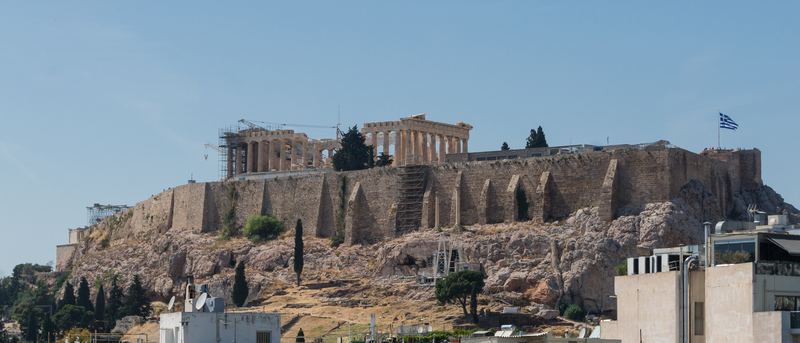
A "Greek" result on a DNA test reflects genetic similarity to present-day reference populations sampled from Greece — it doesn't map onto a single ancient people. Modern Greek ancestry traces an unusually long, well-documented arc: Bronze Age Aegean civilizations, classical antiquity, Roman and Byzantine rule, and later Ottoman-era history all left their mark on the region's population.
At a glance
| Reference type | Modern population comparison, not a direct ancient-DNA match |
|---|---|
| Deep ancestral layers | Hunter-gatherer and Early European Farmer ancestry form a larger share of the Greek genetic profile than in much of northern Europe, with comparatively less Bronze Age steppe input |
| Key historical layers | Bronze Age Aegean civilizations (Minoan and Mycenaean), classical Greek city-states, Hellenistic and Roman rule, and the Byzantine Empire |
The deep layers beneath "Greek" ancestry
Like the rest of Europe, the population of Greece descends from Mesolithic hunter-gatherers and Neolithic farmers who arrived from the Near East and Anatolia — and ancient-DNA studies show the Aegean region received an especially strong and early Early European Farmer contribution given its geographic position close to the Neolithic migration routes out of the Near East. See our guides to hunter-gatherer ancestry and Early European Farmer ancestry for how each layer contributed. Bronze Age steppe ancestry, discussed in our Bronze Age Steppe guide, also reached the Aegean but generally in smaller proportions than in Northern and Central Europe.
Bronze Age Aegean civilizations
Ancient DNA from Bronze Age Greece, including sites associated with the Minoan civilization on Crete and the Mycenaean civilization on the mainland, shows a population already largely in place by around 2000 BC, built primarily on the earlier farmer and hunter-gatherer layers with a documented later contribution from populations further north and east. This deep continuity is part of why studies of ancient Greek DNA have found notable genetic similarity between Bronze Age and many present-day Greek populations, a pattern less commonly seen in some other parts of Europe with more disruptive later migrations.
Classical antiquity to the Byzantine Empire
The classical Greek city-states, the Hellenistic period following Alexander the Great's conquests, and centuries of Roman and then Byzantine rule all shaped the historical and cultural identity of the Greek-speaking world without radically altering its underlying genetic profile in the way some other regions experienced. The Byzantine Empire, centered on Constantinople, preserved Greek language and culture for a thousand years after the fall of Rome in the west, discussed further in our Roman-era ancestry guide.
Regional variation within Greece
Greece shows some regional genetic variation tied to its geography and history: island populations in the Aegean and Crete show distinct local patterns shaped by relative isolation and by Bronze Age Minoan ancestry specifically, while northern regions near the Balkan frontier show somewhat more overlap with neighboring Balkan populations. A single national "Greek" percentage on a DNA test averages over this internal variation.
FAQ
Does "Greek" ancestry on a DNA test mean I'm descended from the ancient Greeks?
In a broad, population-level sense, yes more so than in many other parts of Europe — ancient DNA studies show substantial genetic continuity between Bronze Age and Classical-era Aegean populations and many present-day Greek people. But this reflects a long-term, population-wide continuity, not a documented, traceable line to any specific historical individual or city-state.
Why does Greek ancestry sometimes overlap with Italian, Balkan, or Turkish results?
Greece's long history of trade, empire, and migration across the eastern Mediterranean and the Balkans means genetic boundaries with neighboring regions are not sharp. Overlapping results are common and expected, especially for people with ancestors from border regions or the islands.