 My
MyDenisovan DNA: What It Is and Who Carries It
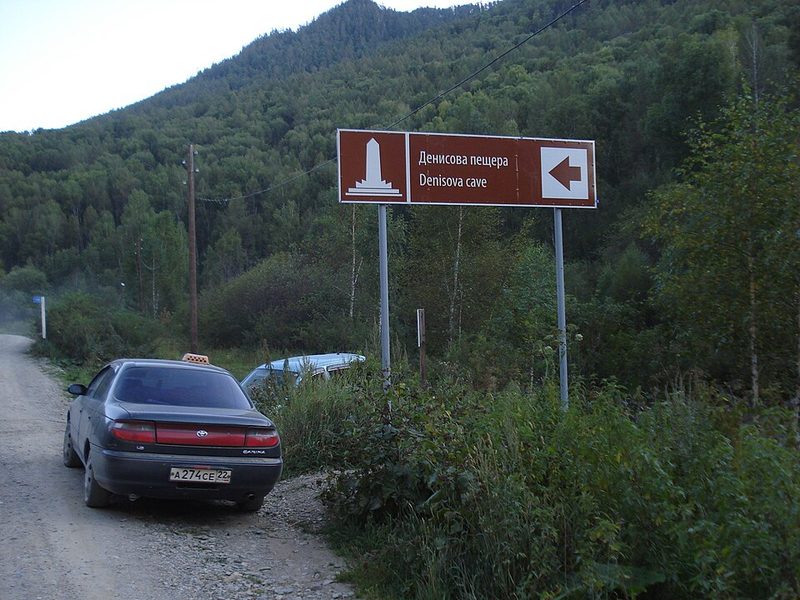
Denisovans were an extinct group of archaic humans, closely related to Neanderthals, known almost entirely from DNA rather than a rich fossil record. They interbred with early Homo sapiens tens of thousands of years ago, and traces of that interbreeding — Denisovan DNA — still show up in the genomes of some living populations today, most heavily in Melanesia. Like Neanderthals, Denisovans interbred with early Homo sapiens — but the genetic trace they left behind is concentrated in a very different part of the world.
| First identified | 2010, from a finger-bone fragment and teeth found in Denisova Cave, Siberia's Altai Mountains |
|---|---|
| Highest modern ancestry | Melanesian populations (Papua New Guinea, parts of Australia and the Pacific Islands), around 4-6% |
| Also detectable in | Southeast Asian, Filipino, and some East Asian and Indigenous American populations, at smaller or trace levels |
| Notable trait link | A Denisovan-derived gene variant (EPAS1) helps Tibetan populations adapt to high-altitude, low-oxygen environments |
| Notable discovery | A single bone fragment from a first-generation Neanderthal-Denisovan hybrid individual, nicknamed "Denny," described in 2018 |
Discovered almost entirely through DNA
Unlike Neanderthals, who are known from hundreds of skeletal remains found across Europe and western Asia over more than a century, Denisovans were identified almost entirely from genetic material rather than a rich fossil record. The initial 2010 discovery was based on DNA extracted from a single finger bone fragment belonging to a young girl, found in Denisova Cave in Siberia. Sequencing revealed it belonged to neither a modern human nor a Neanderthal, but to a previously unknown, genetically distinct group of archaic humans — named Denisovans after the cave. For years afterward, almost everything scientists knew about Denisovans came from genetics rather than skeletal anatomy; a partial jawbone found on the Tibetan Plateau, described in 2019, was one of the first substantial physical Denisovan fossils identified.
Why Melanesia has so much Denisovan ancestry
Denisovans appear to have ranged across a wide swath of Asia, and interbreeding with the ancestors of modern humans likely happened at more than one point as populations migrated through the region. The populations that ended up with the highest proportion of Denisovan ancestry today are in Melanesia — including Papua New Guinea and parts of Australia and the Pacific Islands — where Denisovan DNA can make up an estimated 4 to 6% of the genome, dramatically higher than the roughly 1-2% Neanderthal contribution found in most non-African populations. Smaller amounts show up across Southeast Asia and parts of East Asia and the Americas, generally tracing to the same ancient population movements through Asia.
A famous case: high-altitude adaptation in Tibet
One of the clearest examples of archaic DNA providing a real, measurable benefit involves Denisovans. A particular variant of the EPAS1 gene, which helps the body cope with low oxygen levels at high altitude, is common in Tibetan populations and appears to have entered the human gene pool through interbreeding with Denisovans. It's one of the best-documented cases of archaic-hominin DNA contributing a specific, functional adaptation to a modern human population, rather than just a background statistical signal.
How this compares to Neanderthal ancestry
Denisovans and Neanderthals were closely related to each other — more closely related to each other than either was to modern humans — and both interbred with early Homo sapiens as well as, in at least one documented case, with each other. But the two archaic ancestries show up in very different modern populations: Neanderthal DNA is spread fairly evenly across non-African populations worldwide, while Denisovan DNA is heavily concentrated in Melanesia and parts of Asia. See our Neanderthal DNA explainer for the fuller comparison.
What is the simple definition of a Denisovan?
A Denisovan is a member of an extinct group of archaic humans, closely related to Neanderthals, first identified in 2010 from DNA extracted at Denisova Cave in Siberia. Denisovans interbred with early Homo sapiens, leaving a genetic trace — Denisovan DNA — that persists in some living populations today.
Do most people have any Denisovan DNA?
Most people outside of Melanesia and parts of Asia carry little to no detectable Denisovan DNA — it's a much more geographically concentrated ancestry than Neanderthal DNA, which is spread more broadly across non-African populations worldwide.
Do consumer DNA tests report Denisovan ancestry?
Some do, though it's less universally offered than Neanderthal ancestry reporting, partly because the signal is only strongly detectable in a smaller subset of the global population. Check your specific provider's list of reports to confirm whether it's included.