 My
MyNative American Ancient DNA: What It Means in Your Results
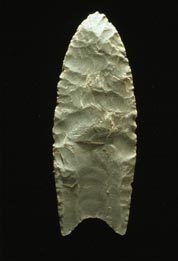
Native American ancestry traces to one of the last great human migrations into an unpopulated continent: a movement of people across the Beringian land bridge connecting Siberia and Alaska near the end of the last Ice Age, followed by rapid expansion through two continents that, within a few thousand years, produced the full range of Indigenous peoples from the Arctic to Tierra del Fuego.
| Migration route | Across the Beringian land bridge from Siberia into Alaska, with a period of genetic isolation beforehand |
|---|---|
| Key ancient genome | Anzick-1, a roughly 12,600-year-old infant burial from Montana associated with Clovis-era tools (Rasmussen et al., Nature, 2014) |
| Related ancient population | "Ancient Beringians," identified from Upward Sun River infant burials in Alaska (Moreno-Mayar et al., Nature, 2018) |
| Deep ancestral source | A mixture of East Asian and Ancient North Eurasian ancestry, comparable to the source of the Mal'ta genome in Siberia |
The Beringian standstill
Genetic evidence indicates that the ancestors of Native American populations did not simply walk across the Beringian land bridge in one continuous movement. Instead, a founding population appears to have remained genetically isolated somewhere in the Beringia region — the now-submerged landmass that once connected Siberia and Alaska — for several thousand years before continuing south, a period researchers refer to as the "Beringian standstill." This isolation allowed a distinct genetic signature to develop before the population split further and began moving into the Americas proper.
The Anzick-1 genome and the Clovis culture
In 2014, researchers sequenced the genome of an infant buried in Montana roughly 12,600 years ago alongside artifacts belonging to the Clovis culture, one of the earliest well-documented toolmaking traditions in the Americas. This genome, known as Anzick-1, remains one of the most important reference points in Native American population genetics: it showed a close genetic relationship to present-day Central and South American Indigenous populations, supporting the idea of a single major founding migration that then diversified as it spread through the Americas.
The Ancient Beringian population
A separate 2018 study of infant remains from the Upward Sun River site in Alaska, dated to roughly 11,500 years ago, identified a previously undescribed population researchers named "Ancient Beringians." Genetically, this group appears to have split off from the ancestors of all other Native American populations at an early stage, while still in the Beringia region, and remained in place in Alaska rather than continuing south — making it a distinct branch alongside, rather than ancestral to, the populations that went on to populate the rest of the Americas.
Diversification across two continents
Once south of the continental ice sheets, the founding population diversified rapidly, producing the Northern and Southern Native American genetic branches identified in ancient and present-day genomes, and eventually the full linguistic and cultural diversity of Indigenous peoples across North, Central, and South America. Later, smaller-scale migrations also contributed some additional ancestry to specific Arctic and sub-Arctic populations, layered on top of this original founding event.
If your Ancient Origins results show Native American ancestry
A category referencing Native American ancient ancestry generally reflects genetic resemblance to this founding population and its early descendants, most directly represented in ancient reference genomes like Anzick-1. Coverage of Indigenous American ancestry varies considerably between commercial ancient-DNA and ancestry-testing providers, partly for scientific reasons (genetic diversity within the founding population was more limited than in some other world regions) and partly due to differences in each provider's reference panel. See our explainer on ancient DNA testing for background on how these comparisons work in general.
Native American ancestry vs. other ancient categories
Because the deep ancestral sources of Native American populations trace back through Siberia and ultimately connect to the broader Ancient North Eurasian and East Asian ancestral lineages, some ancient-origins panels may show a distant statistical relationship between this category and East Asian ancient ancestry. This reflects shared deep ancestry from tens of thousands of years ago, not a recent connection.
Were there earlier waves of migration into the Americas before Clovis?
This remains an area of active research and some debate. A small number of archaeological sites suggest human presence in the Americas earlier than the classic Clovis-era timeline, though genetic evidence for a distinct, earlier founding population separate from the ancestors of Anzick-1 and related genomes has not been firmly established. Most ancient genomes sequenced so far are consistent with a single major founding migration.
Why do commercial DNA tests sometimes struggle with Native American ancestry percentages?
The founding population that gave rise to Indigenous American ancestry went through a genetic bottleneck during the Beringian migration, which reduced genetic diversity compared to some other world regions. Combined with historically limited sampling of Indigenous American reference genomes in many commercial databases, this can make precise percentage estimates less reliable than for some other ancestry categories. See our most accurate DNA test guide for how different providers compare.